Research perspective
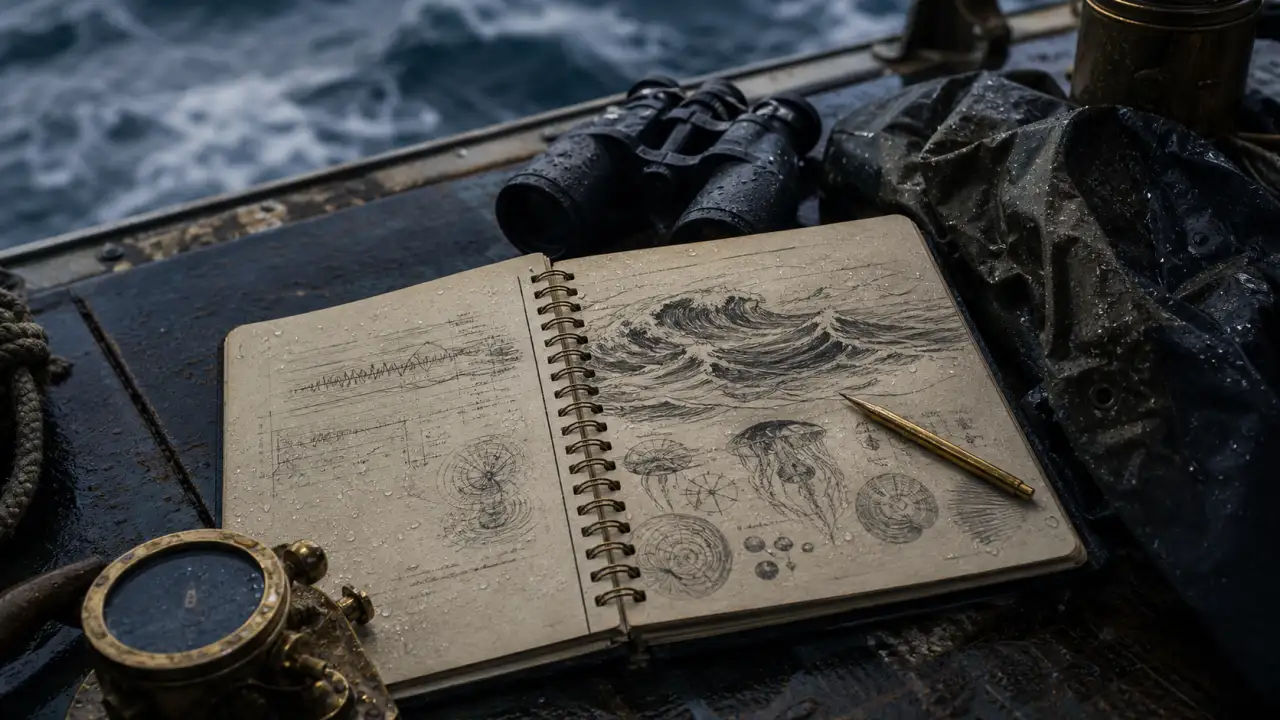
Field Notes belongs to the research logs shelf of Nautilus Research Logs: a fictional but carefully organized editorial archive for readers who want marine science explained with precision and atmosphere. The subject is treated as practical research rather than adventure decoration. Each observation connects instruments, field judgment, environmental context, and responsible uncertainty, so the page reads like a working log instead of a promotional summary.
The first rule of useful ocean writing is that a dramatic scene must still be measured. A glowing console, a brass compass, or a dark pressure window may frame the mood, but the value of the log comes from the way evidence is gathered. Readers can compare this page with Expedition Logs, Coastal Research, and Research Archive to see how the same discipline appears across different corners of the archive.
Field records normally begin before anyone touches the water. Researchers define the question, identify the limits of the equipment, check weather and sea state, and decide how much precision the mission can honestly support. In deep water, small planning errors become expensive. A sample without location, a sonar pass without calibration, or a photograph without scale can look impressive while answering very little.
Methods, context, and interpretation
A strong research log therefore separates observation from interpretation. Observation states what was seen, measured, or recovered. Interpretation explains what those facts may suggest. The distinction matters when studying living habitats, technical systems, or historical traces. It protects the archive from overclaiming, and it lets future readers revisit the evidence when new tools or better comparative data become available.
The archive also treats technology as part of the scientific method. Sensors, submersibles, acoustic systems, sample bottles, microscopes, and notebooks are not background props. They shape what can be known. A hydrophone hears what a camera misses. A sediment core preserves history that a single dive cannot show. A laboratory assay may confirm or complicate the first impression from a field note.
This is why internal navigation is important. A reader studying this subject may need the engineering background in submarine engineering principles, the mapping perspective in ocean floor mapping, or the ecological context in marine biodiversity patterns. No single article can hold the full ocean system; the value comes from a connected archive.
Environmental context is equally important. Temperature, salinity, light, depth, oxygen, current speed, season, and human disturbance can all change the meaning of a finding. A species record in a reef lagoon is not the same kind of evidence as a record from a cold seep or polar shelf. A water sample taken after a storm may tell a different story than one taken during calm stratified conditions.
Why this log matters
For that reason, the best logs preserve uncertainty. They record what instruments could not see, where sampling was thin, when conditions changed, and which conclusions remain provisional. This does not weaken the writing. It makes the writing more scientific. Readers should be able to distinguish a confident measurement, a cautious inference, and an open question that deserves another expedition.
The historical layer adds another dimension. Earlier ocean observers worked with limited instruments but often kept meticulous notes. Their maps, specimen labels, pressure readings, and sketches can still guide modern interpretation when handled carefully. See historic ocean expeditions and Victorian science instruments for the archive’s treatment of older survey traditions without copying any branded fictional universe.
Editorial standard
Modern ocean research also carries ethical obligations. The archive favors non-destructive observation when possible, careful handling of cultural sites, transparent data limits, and conservation-aware interpretation. A reef, wreck, vent field, or polar habitat is not simply a backdrop. It is a living or historical system that can be damaged by careless attention.
The practical takeaway is simple: good marine research writing combines atmosphere with accountability. It can be cinematic without being vague, technical without being unreadable, and imaginative without borrowing protected brands or official characters. That balance defines Nautilus Research Logs as an original marine science archive.
Continue through the archive with About, Contact, and Science Lab. Together these pages build a topical map across ocean science, submarine systems, marine ecology, exploration history, and field documentation.